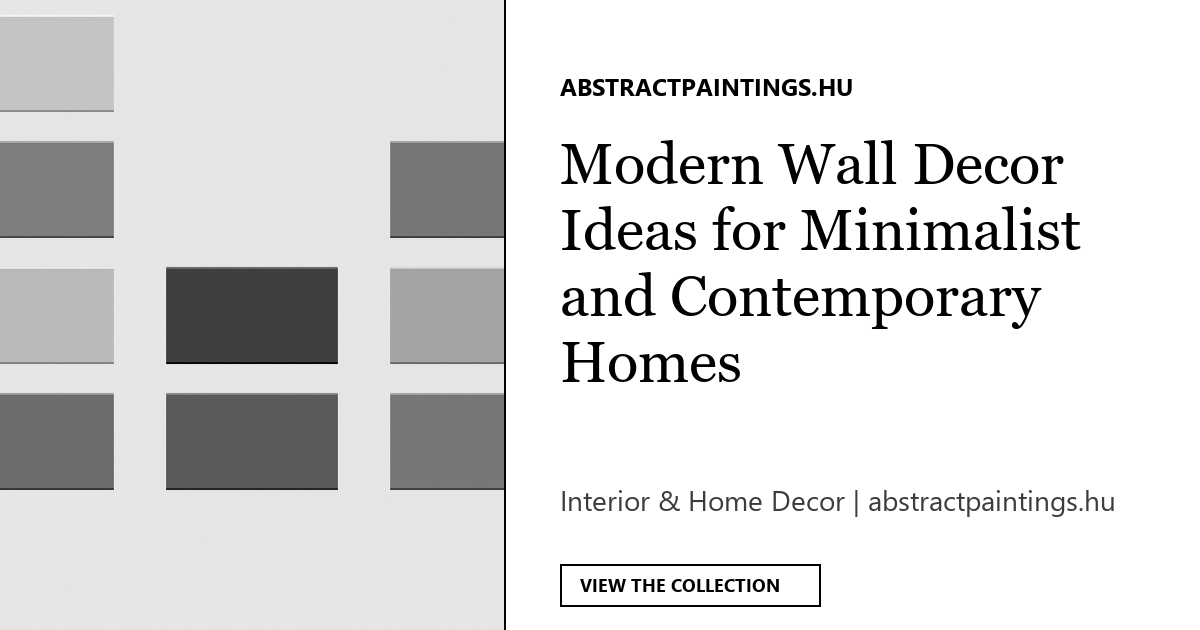
Modern Wall Decor Ideas for Minimalist and Contemporary Homes
As a rule, in a living room the sofa sets the brief. Crucially, measure its width, aim for a piece around two thirds to three quarters of that span, and hang the abstract painting so its lower edge sits fifteen to twenty centimetres above the backrest. On balance, a diptych or triptych works beautifully here since it echoes the horizontal line of the seating.
The subject of this article is one we return to constantly at the gallery: Modern Wall Decor Ideas for Minimalist and Contemporary Homes. That is the question this article sets out to answer clearly and practically, drawing on years of work with original abstract paintings. This is a sound starting point for pastel colors minimalist abstract art as well.
Before you read on
- Leave generous empty wall around a canvas so it reads as art, not decor.
- Hang the centre of the piece around 145 to 150 cm from the floor.
- Let one strong original painting be the focal point rather than many small frames.
Matching the tone, not the sofa
Put simply, a calm interior can take one confident gesture. More often than not, where the furniture and walls are restrained, an expressive abstract painting with sweeping marks becomes the single point of energy in the room. Time and again, that contrast between still surroundings and a lively canvas is what gives minimalist spaces their tension.
Time and again, do not be afraid of empty wall around a painting. In practice, negative space is not wasted space; it is the margin that lets the work read as art rather than decoration. Crucially, a generous border of plain wall makes even a mid-sized canvas feel deliberate and expensive.
Where surface earns its place
As a rule, the entrance hall is your home's opening sentence. Naturally, a single arresting abstract painting by the door tells visitors what to expect and sets the tone before they reach the living room. On balance, it is a small wall doing a disproportionate amount of work.
Put simply, home offices are where abstract art quietly earns its keep. On balance, a considered canvas in the field of view lifts a plain working wall, breaks the monotony of a screen, and gives the mind somewhere to wander between tasks. In our experience, office art decor does not need to shout to do its job.
Small rooms, large statements
More often than not, the short answer is to start with the wall, not the painting: measure the space, decide how much of it you want the art to fill, and only then choose a piece. Put simply, a large abstract painting that covers roughly two thirds of the wall above your sofa will feel intentional, while an undersized canvas leaves the room looking unfinished.
Just as importantly, colour is not the only way to bring warmth to a wall. In practice, in a black and white scheme, the warmth comes from surface and tone: ivory whites, smoky greys, the soft grain of linen canvas. More often than not, these achromatic layers feel rich without introducing a single competing hue.
When to go oversized
In practice, balance the visual weight of the furniture. Put simply, a dark, heavy sofa can carry a bright, high-key canvas above it, while a pale, light-framed room may want a deeper, more grounded piece. More often than not, reading that weight relationship keeps the wall from feeling top-heavy or thin.
Looking for a piece like this? Browse our original abstract paintings, hand-painted in Budapest and shipped worldwide, ready to hang.
Choosing colourless over busy
In practice, consider the sightline between rooms. Put simply, when two spaces open onto each other, a painting visible through the connecting doorway ties them together. On balance, repeating a tone or a format across that threshold gives an open-plan home a sense of quiet continuity.
In practice, rooms evolve, and art should be allowed to move. In our experience, hanging systems and picture rails let you reposition a canvas without patching the wall, so a painting can migrate from the hall to the study as your home changes. As a rule, flexibility is a quietly luxurious thing to design in.
How placement decides everything
On balance, a single abstract painting can anchor an entire room in a way that a shelf of small objects never will. Put simply, when the canvas is large enough to command the wall, the eye settles on it first and the rest of the interior arranges itself around that focal point. In our experience, this is why so many designers reach for one generous piece of canvas wall art rather than a scatter of minor frames.
- In a monochrome scheme, warmth comes from tone and texture, not colour.
- Match the mood of the artwork to how the room is actually used.
- Black and white abstract art will not clash with a scheme you later change.
- Hang the centre of the piece around 145 to 150 cm from the floor.
Getting the proportion right
Crucially, hallways and staircases are the overlooked heroes of a home. In our experience, a tall vertical canvas draws the eye upward on a stairwell, while a run of related pieces turns a long corridor into a small private exhibition. Time and again, these transitional spaces are ideal for modern wall art that you want people to discover slowly.
Just as importantly, the wall behind a bed is a chance most bedrooms waste. Put simply, a single calm canvas there, sized generously and hung low over the headboard, turns a functional room into a restful one. Crucially, keep the tone quiet and let the piece be the last thing you notice at night.
Living with contrast
Time and again, two smaller works can outperform one awkward canvas. Time and again, when a wall is broken by a doorway or a light switch, a balanced pair sidesteps the obstacle and still fills the space. Just as importantly, a diptych is simply this idea made intentional, with the composition designed to span the gap.
Answers to frequent questions
Is one large painting better than several small ones?
Does a black and white painting work in a colourful room?
Which rooms benefit most from abstract art?
How big should an abstract painting be above a sofa?
How much wall space should I leave around a canvas?
Should the painting match my furniture?
Further reading: the principles of feng shui. From the gallery, see Graphite Composition IV, one of our original geometric abstraction paintings, or browse the full collection of original abstract paintings, hand-painted in Budapest.